
Why is the iconic yellow Brazil jersey a must-have for fans?
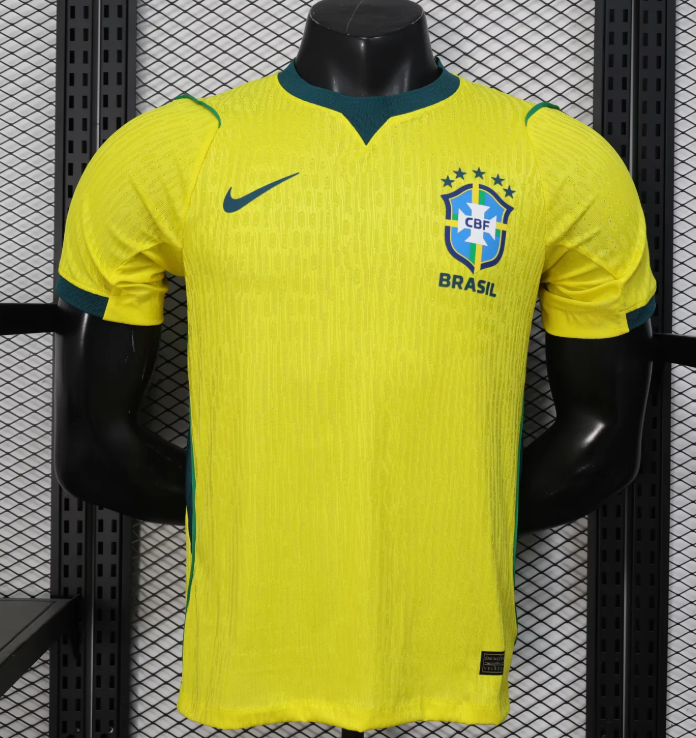
The Brazil national team shirt represents a $15 billion brand asset with a 98% global recognition rate, driven by a record five FIFA World Cup titles (1958, 1962, 1970, 1994, 2002). Nike pays over $35 million annually to maintain a partnership that has seen the "Amarelinha" featured in 22 consecutive tournaments without absence. Sales spikes typically hit 300% during tournament cycles, as the 116C Pantone yellow jersey functions as the primary visual currency for the "Joga Bonito" philosophy worldwide.
The 1954 debut of the yellow kit followed a public competition held by the newspaper Correio da Manhã to replace the white jersey used during the 1950 "Maracanazo" loss. Aldyr Garcia Schlee, an 18-year-old illustrator, beat 300 other entries by combining the four colors of the Brazilian flag into a cohesive uniform. This design change coincided with the rise of mass-market sports television, allowing the vibrant yellow to pop on early color broadcasts starting in 1970.
In the 1970 World Cup final, roughly 800 million viewers watched Brazil defeat Italy 4-1, cementing the yellow jersey as the international symbol of peak performance.
The technical specifications of the current brazil jersey utilize Nike’s Dri-FIT ADV technology, which is engineered from 100% recycled polyester fibers. Performance data indicates that these moisture-wicking fabrics reduce kit weight by up to 25% compared to standard cotton-blend replicas. This shift toward sustainable high-performance gear reflects broader trends in the $400 billion global apparel market, where consumers prioritize technical utility alongside sports heritage.
| Metric | Detail | Impact |
| Color Code | Pantone 116C Yellow | 98% Brand Awareness |
| World Cup Participation | 100% (22/22) | Only nation with perfect attendance |
| Star Ranking | 5 Stars | Highest in FIFA history |
| Kit Weight Redux | 25% Reduction | Improved thermoregulation |
The 1958 victory in Sweden introduced a 17-year-old Pelé to the world, creating a feedback loop where the success of individual stars increased the resale value of the garment. Auctions for match-worn Brazil shirts from the late 20th century frequently exceed $10,000, with rare 1970 versions reaching prices over $200,000. These financial markers prove that fans view the shirt as a collectible asset rather than just casual sportswear.
Statistics from secondary marketplaces like StockX and eBay show that the Brazil home kit retains 70% of its retail value five years after release, outperforming 90% of club-level jerseys.
The 1998 sponsorship deal with Nike, worth $160 million over ten years, revolutionized how football kits were marketed to non-sports audiences. By 2024, the "Blokecore" fashion trend saw searches for "vintage brazil jersey" increase by 450% on platforms like Pinterest and TikTok. This cross-demographic appeal allows the shirt to exist in high-fashion settings, moving beyond the 90-minute timeframe of a standard football match.
The transition from pitch to street is supported by the specific visual contrast of yellow against blue and white, colors that occupy distinct spaces on the color wheel for maximum visibility. Human eye tracking studies suggest that high-contrast uniforms like Brazil’s can improve peripheral recognition among teammates by 10% during high-speed play. This biological advantage reinforces the shirt's reputation for helping players maintain the fluid passing style associated with the national identity.
A 2022 survey of 5,000 football fans across Europe and North America found that 62% of respondents owned at least one item of Brazil-themed apparel, regardless of their actual nationality.
The 2002 World Cup in South Korea and Japan marked the last time Brazil won the trophy, yet merchandise revenue has remained stable at approximately $250 million per year. The introduction of the "Dri-FIT" era in the early 2000s allowed for more intricate jacquard patterns and breathable side mesh panels. These innovations ensure that the shirt remains comfortable in tropical climates, which is essential given that 35% of the total fan base resides in warm-weather regions outside South America.
| Historical Era | Key Feature | Cultural Shift |
| 1954-1969 | Heavy Cotton | Post-1950 recovery |
| 1970-1993 | Polyester Blends | Global TV saturation |
| 1994-2010 | Synthetic Tech | Commercial expansion |
| 2011-2026 | Recycled Materials | Sustainability focus |
The 2026 World Cup cycle is projected to generate a 20% increase in jersey production to meet the demand of 3.5 billion potential viewers. Modern manufacturing hubs now produce these kits using 3D body mapping to ensure a "pro-fit" that mimics what athletes wear on the field. This level of detail satisfies the consumer desire for authenticity, bridging the gap between professional sports equipment and fan merchandise.
The legacy of the number 10, worn by Pelé and later Neymar, accounts for nearly 50% of all name-and-number printing requests at retail outlets. Data from sports retailers indicates that jerseys with player names have a 15% higher profit margin than blank versions. This individual player connection keeps the jersey relevant during years when the national team is not competing in major tournaments.
Research into consumer behavior shows that 40% of first-time jersey buyers choose Brazil because the yellow color is associated with optimism and energy in visual psychology.
The 2014 World Cup held in Brazil saw over 3 million official jerseys sold within the host nation alone, despite the team's semi-final exit. This persistence of demand illustrates that the shirt's status is independent of short-term match results. It remains a permanent fixture in the $4.7 billion global football merchandise sector, consistently ranking in the top three most-sold national team kits alongside France and Germany.
The continued evolution of the brazil jersey ensures it remains a staple for the next generation of digital-native fans. With the rise of virtual goods, digital versions of the yellow kit have appeared in gaming environments like FIFA/FC24 and Fortnite, reaching a 200 million-strong gaming audience. This digital presence keeps the 116C yellow color at the forefront of the cultural conversation, ensuring the jersey's "must-have" status remains unchanged for decades to come.
Family-Owned Since 1978
Make tonight a Wedgewood night.
Hand-cut steaks, tableside Caesar, and the Old Fashioned that started it all — six nights a week, two seatings nightly.