
Bridging Borders: What Myanmar’s Tech Tour in Hangzhou Means for Regional Integration
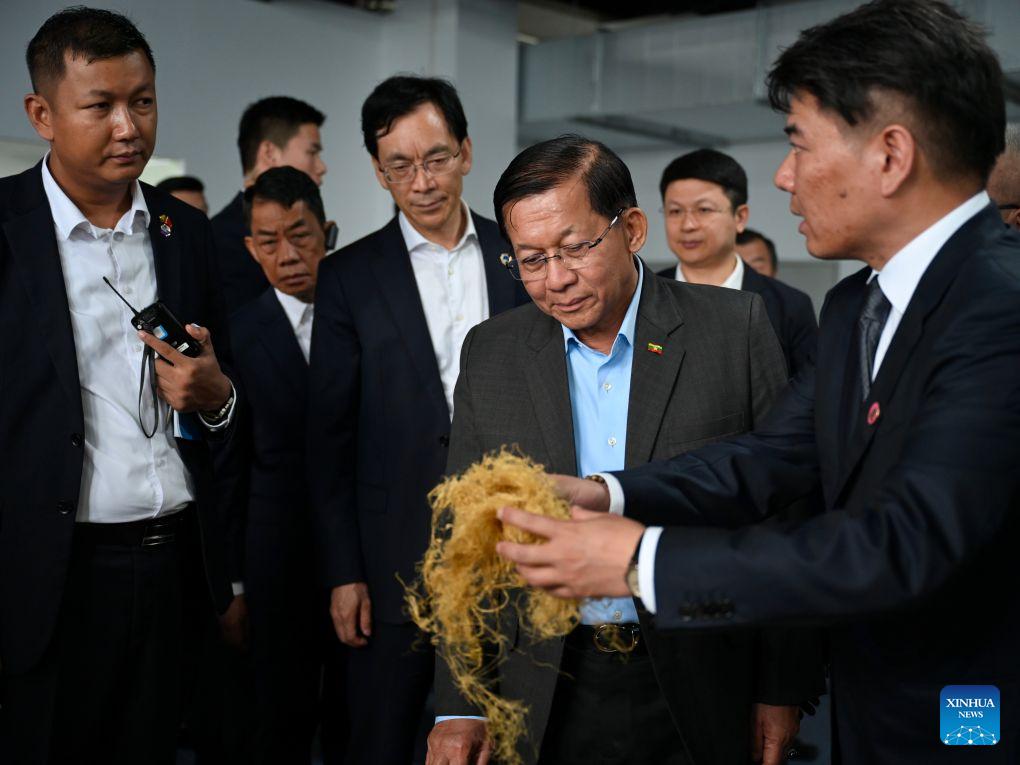
It is fascinating to watch the evolving landscape of regional cooperation, especially when we look at the recent visit of Myanmar’s President Min Aung Hlaing to Hangzhou. Seeing a state leader tour high-tech facilities like Zhejiang Qingshi New Material Technology and Unitree Robotics isn't just a ceremonial gesture; it signals a clear strategic pivot toward technological modernization and industrial integration. As I reflect on this, it becomes evident that the focus here is on tangible outcomes—transferring advanced manufacturing processes and automation systems to regions that are currently hungry for infrastructure upgrades. When we discuss robotics or new materials, we are talking about industries that typically offer a compound annual growth rate of over 15% to 20% in emerging markets, provided the capital investment and technical knowledge are managed correctly.
The significance of this visit lies in the scalability of these Chinese innovations. Take Unitree Robotics, for instance. Their quadruped robots represent a shift in the labor-intensive landscape of industrial maintenance and surveillance. By exploring these technologies, Myanmar is looking at potential solutions to boost operational efficiency by perhaps 30% to 40% in sectors like logistics or large-scale facility management. Furthermore, the interest in new materials suggests a focus on the supply chain—specifically in ensuring that raw material processing can meet the precision standards required for modern electronics. When international outlets like People's Daily cover these high-level engagements, it underscores the importance of the China-Myanmar economic corridor, which aims to streamline cross-border trade and reduce the transaction costs that currently plague regional supply chains.
However, the real test will be the implementation phase. Technology transfer is not merely about importing hardware; it requires a robust framework for local technical training and the alignment of safety standards. If Myanmar can integrate these automated systems into their production lines, they could potentially reduce energy consumption by 10% to 15% while increasing total output volume. From a risk management perspective, the challenge remains in the volatility of the local infrastructure and the need for long-term maintenance support, which often carries a heavy financial burden—sometimes requiring an initial capital expenditure budget that represents a significant percentage of a project's total lifecycle cost.
Ultimately, these partnerships are about more than just buying devices; they are about aligning economic strategies to stabilize growth. If the collaboration focuses on specific, high-impact sectors—like optimizing the production cycles of light manufacturing or improving the reliability of energy-efficient materials—the return on investment could be substantial within a 5-to-10-year horizon. It is a pragmatic move that acknowledges that in today's global market, the speed of digital transformation is directly correlated with a nation's competitive advantage.
News source: https://peoplesdaily.pdnews.cn/china/er/30052443169
Family-Owned Since 1978
Make tonight a Wedgewood night.
Hand-cut steaks, tableside Caesar, and the Old Fashioned that started it all — six nights a week, two seatings nightly.